
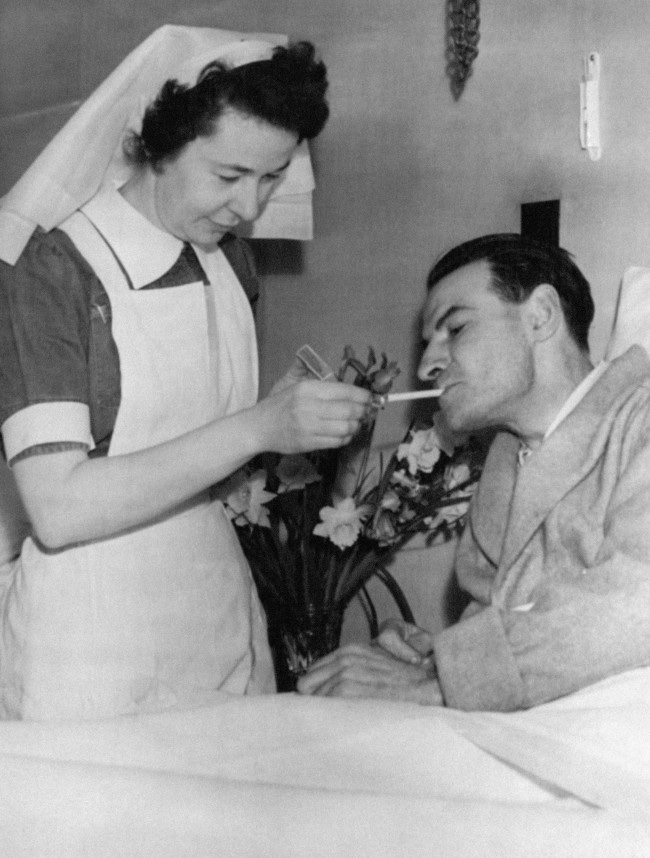
Cigarette smoking grew rapidly in America in the early part of the twentieth century, following the invention of automatic cigarette rolling machines and the rise of advertising and promotion on an unprecedented scale (4). Cigarette use grew despite opposition from temperance advocates and religious leaders concerned that smoking would lead to alcohol abuse and narcotic drugs, especially among youth (1, 4). During the first half of the century, however, neither the public nor most physicians recognized a significant health threat from smoking, even though the rise of lung cancer prompted epidemiological research beginning as early as the 1920s (1, 4). With the end of Prohibition (in 1933) and the decline of the temperance movement, advertising in the 1930s and 1940s was defined by campaigns which often included explicit health claims, such as “They don’t get your wind” (Camel, 1935), “gentle on my throat” (Lucky Strike, 1937), “play safe with your throat” (Phillip Morris, 1941), and “Fresh as mountain air” (Old Gold, 1946) (4, 5). Smokers of Camels were even encouraged to smoke a cigarette between every course of a Thanksgiving meal–as an “aid to digestion.” Except for a brief period around the Great Depression, per capita cigarette consumption increased steadily until 1953 (1, 4, 5), by which time 47% of American adults were smoking cigarettes (58% of males and 36% of females), and half of all physicians (6).
In the early 1950s evidence implicating smoking as a cause of lung cancer began to appear more frequently in medical journals and the popular press (1, 4). Cigarette sales declined in 1953 and the first part of 1954, but quickly rebounded as manufacturers rushed to introduce and market “filtered” cigarettes to allay health concerns. The emergence of the filter tip cigarette was a direct response to the publicity given to evidence linking smoking and cancer, and consumers reacted by shifting over to the new designs (4, 7). In 1952 filtered cigarettes accounted for less than 2% of sales; by 1957 this had grown to 40% and would surpass 60 % by 1966 (7, 8). The advertised benefits of filters were illusory, however, given that smokers of filtered brands often inhaled as much or more tar, nicotine, and noxious gases as smokers of unfiltered cigarettes (9–11). Filters were not really even filters in any meaningful sense, since there was no such thing as “clean smoke.” The industry had recognized this as early as the 1930s, but smokers were led to believe they were safer (4).
 MOMMA J. CPS, HRS, MARS. BOLIVAR MO
Leave a comment