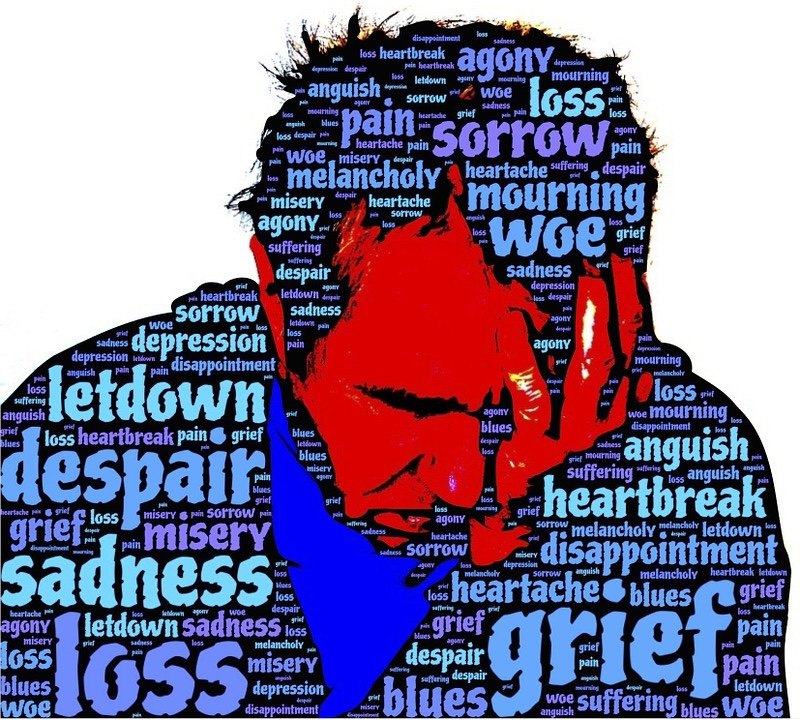
This is what grief is.
A hole ripped through the very fabric of your being.
The hole eventually heals along the jagged edges that remain. It may even shrink in size.
But that hole will always be there.
A piece of you always missing.
For where there is deep grief, there was great love.
Don’t be ashamed of your grief.
Don’t judge it.
Don’t suppress it.
Don’t rush it.
Rather, acknowledge it.
Lean into it.
Listen to it.
Feel it.
Sit with it.
Sit with the pain. And remember the love.
This is where the healing will begin.
-Serenity Ravenwolve
- A friend, family member, partner or pet.
- A marriage, friendship or another form of kinship.
- Your home, neighborhood or community.
- Your job or career.
- Financial stability.
- A dream or goal.
- Good health.
- Your youth.
- Fertility.
Most of us think of grief as happening in the painful period following the death of a loved one. But grief can accompany any event that disrupts or challenges our sense of normalcy or ourselves. This includes the loss of connections that define us.
You may grieve the loss of:
You may also grieve your own loss of life as you prepare for death. For instance, people diagnosed with terminal illnesses often grieve no longer having the time to experience or achieve things they would’ve liked to.
Stages of grief
Elizabeth Kubler-Ross describes the five stages of grief in her book On Death and Dying. Although it was published in 1969, it’s still the most well-known resource for understanding the grieving process. For her book, Kubler-Ross interviewed over 200 people with terminal illnesses. Through these conversations, she identified five common stages people experience as they grapple with the realities of impending death.
Although Kubler-Ross’s work focuses on grief responses from people who are dying, many use these stages to understand grief across multiple types of loss. Stages include:
- Denial. You may have difficulty accepting that a loss is real.
- Anger. You may direct anger at multiple sources, including people who couldn’t save a loved one, God, yourself — or even no one in particular.
- Bargaining. You may imagine reaching an agreement, so you don’t have to deal with a loss. You may also regret past actions that you imagine could’ve spared you from loss.
- Depression. You may experience the complex emotions associated with depression, including emotional detachment.
- Acceptance. Eventually, most people embrace the reality of loss even if the pain’s still there.
Many people reduce these stages to linear steps everyone must experience to grieve. But the stages aren’t (and were never intended to be) rules. Not everyone who grieves experiences these stages, and they don’t have to happen in any particular order.

What are some types of grief?
There are multiple ways to experience grief. Different types of grief describe how varied and complex grief can be.
Anticipatory grief
Anticipatory grief involves grieving before the actual loss. For example, you may begin grieving when you learn that you or a loved one has a terminal illness. Processing grief beforehand can prepare you to face the loss when the time comes. Still, it’s important not to allow grieving to distract you from enjoying the precious time you do have.
Abbreviated grief
Sometimes, you’re able to move through the grieving process quickly. This is the case with abbreviated grief. Abbreviated grief may follow anticipatory grief. You can grieve a loss quickly because you’ve already done a lot of emotional labor while anticipating that loss. Grieving for a short time doesn’t mean you never truly cared about what you lost. When it comes to grief, we’re all on different timelines.
Delayed grief
Instead of experiencing the emotions that accompany grief immediately after a loss, you feel them days, weeks or even months later. In some instances, the shock of the loss pauses your body’s ability to work through these emotions. Or you may be so busy handling the practical matters that accompany loss (like funerals and wills) that your body can’t grieve until you’ve handled these responsibilities.
Inhibited grief
Inhibited grief involves repressing emotions. Most of us haven’t been taught how to process — or even how to recognize — the confusing emotions that can arise when we’re grieving. As a result, many people who repress their emotions don’t realize they’re doing so. Unfortunately, when you don’t allow yourself to pause and feel these emotions, grief often shows up as physical symptoms like an upset stomach, insomnia, anxiety or even panic attacks.
Cumulative grief
With cumulative grief, you’re working through multiple losses at once. For example, you’re not only grieving the loss of a child. You’re grieving the ending of a marriage that followed that loss. Grieving multiple losses simultaneously makes the process difficult and complex in unexpected ways.
Collective grief
Most of us think of grief as personal, but collectives (groups) grieve, too. Major events like wars, natural disasters, school shootings and pandemics create far-reaching losses. They change what counts as “normal” life. As a group, we grieve the shared experiences we’ve lost as we struggle to imagine a changed future.
What are the symptoms of grief?
Grief can affect every aspect of your being — your mind, body and spirit.
Emotional symptoms
People who are grieving often describe emotions as “coming in waves.” It may feel as if emotions wash over you without warning. One minute, life may feel as if it were back to normal, and the next, you may find yourself in tears. Grief causes people to experience the entire spectrum of emotions — from sadness to anger to joy. You may sometimes feel detached from your emotions and operate as if you were on autopilot.
You may experience confusing and conflicting emotions, too, such as:
- Sadness that a loved one’s gone but relief that they’re at peace.
- Yearning for a spouse after a divorce but also excitement that you get another shot at love.
- Guilt for feeling grateful that you no longer have to provide exhausting around-the-clock care for a dying relative.
- Competing feelings of apathy, anger, sadness and regret as you grieve the loss of a friend or family member with whom you had a strained or hostile relationship.
There are no right or wrong emotions when it comes to grief. It’s essential to acknowledge and feel them to heal.
Physical symptoms
Loss is an extreme stressor that can take a major physical toll on your body. Grief can overwork your nervous system. It can cause a weakened immune system that makes it easier for you to get sick.
Symptoms include:
- Fatigue.
- Headaches.
- Nausea.
- Restlessness.
- Upset stomach.
- Heart palpitations.
- Weak muscles or joint pain.
- Tightness in your chest or throat.
- Having reduced or increased appetite.
- Trouble sleeping (insomnia) or sleeping too much.
Behavioral changes
Grief can make it hard to concentrate or complete tasks. Symptoms include:
- Confusion.
- Trouble thinking or making decisions.
- Feeling as if you’ve lost a sense of hope or direction.
- Difficulty focusing on anything other than your loss.
- Difficulty remembering or keeping track of your responsibilities.

It’s important to remember that grief doesn’t fit into neat boxes or timelines. Everyone’s grief and grieving timelines are different. Also, there’s never a time when you’re “done” with grief.
 MOMMA J. CPS, HRS, MARS. BOLIVAR MO
Leave a comment